Undergraduate Educational and Training Activities - examples from Phase 1, 2, 3 and 5 (YLLSOM, NUS)
[combining some elements / features from extended learning/engagement, pre-session preparation (part of flipping classroom), live session to illustrate and demonstrate 'how to study' whilst curating buffet of choices of 'what to study' from open access high quality online resources combined with in-house customised created modular content), allocating part of session / curricular time for self study [customised, individualissed, on-demand, bite-size, modular, just-in-time and as required], and opportunities for live interactive Q and A, both in-person and on Zoom / digital, and subsequently online (on Entrada or via email) - see examples within session description and content accessible links below
Shorey, S., Ang, E., Chua, J., & Goh, P. S. (2022). Coaching interventions among healthcare students in tertiary education to improve mental well-being: A mixed studies review. Nurse education today, 109, 105222. https://doi.org/10.1016/j.nedt.2021.105222
Goh, PS, Schlegel, E. Small, Sustainable, Steps to Success as a Scholar in Health Professions Education - Micro (Macro and Meta) Matters. (The Asia Pacific Scholar, submitted revision on 3 October 2022, accepted for publication 1 November 2022).
Goh, P.S., Roberts-Lieb, S., & Sandars, J. (2022). Micro-Scholarship: An innovative approach for the first steps for Scholarship in Health Professions Education. Medical Teacher, 1–6. Advance online publication. https://doi.org/10.1080/0142159X.2022.2133689
"(Open) Micro-Scholarship is an extension of (open) Micro-Practice and Micro-Learning; from Taking note, to Making notes, to Sharing notes." - Poh-Sun Goh, 22 October 2022, Saturday, 22 October 2022, 0731am, Singapore Time
I will be presenting from these slides (attached) tomorrow during our scheduled 12 noon session (Tuesday 8th Nov 2022).
Have attached pdf copy for you to download and write notes on, to folllow along my presentation tomorrow.
These slides were put together by my colleague Dr Samuel Lau, and have been used for previous sessions with your fellow student groups by Dr Lau, and my other colleague Dr Low Ying Liang.
I will be presenting for approximately 30 minutes, highlighting key ideas, as well as introducing complimentary material for self-study, on specially curated for you (medical student) interactive high quality, practical, usable and user friendly, short and to the point, open-access online websites, for modular, bite-size, on demand and just-in-time learning and specific topic review, accessible on my session blog - https://medicaleducationelearning.blogspot.com/2022/11/phase-v-yllsom-year-5-internal-medicine.html. The remaining 60 minutes tutorial time can be used for independent self-study (I strongly recommend you use allocated curricular time to do this), as well as for those of you who have done preliminary review of this material, or who have questions from clinical practice related to neuroimaging or neuroradiology to engage in a live interactive Q and A discussion with me. For those students who after the initial 30 minute 'presentation' would like to engage in independent self-study, or in small groups, please feel free to email me directly or post questions on Entrada at any time next 24 hours after this session. I will aim to respond to these within 24 to 48 hours.
Undergraduate Educational and Training Activities - examples from Phase 1, 2, 3 and 5 (YLLSOM, NUS); Examples from postgraduate residency tutorials and training; instructional design, use of technology (to support learning and training),and underlying learning science -
Looking Back, Looking Forward - end 2021, 2022, 2023, 2024 and 2025
My focus for 2021/2022 and 2023 is, and will be on Technology - practices, tools and platforms (with emphasis on open access) supporting both Micro-Learning and Micro-Practice [modular, bite-size, just-in-time, on-demand, work-place / immediately relevant to practice-demands]; and 'Micro-Scholarship' as extension of Micro-Learning and Micro-Practice.
⬇
"Our Professional Practice(s) and Portfolios AS Scholarship. Accessible and Assessable. Micro-Practice and Micro-Portfolio items AS Assessment." - Poh-Sun Goh, 18 December 2022, Sunday, 0532am, Singapore Time
" 'Posts, Publications. Presentations' - an Integrated (Public) Professional Profile" - Poh-Sun Goh, 14 March 2023, Tuesday, 0506am, Singapore Time
⬇
As well as Coaching, in Medical and Health Professions Education and Faculty Development.
Coaching for #Why, Faculty Development for #How (#Why, before #What and #How) - #Why (#Motivation, #Self-Awareness, #Personal #Insight into what is #Personally + #Professionally #Meaningful) before #What and #How (including #Where, #When, and with #Whom).
⬇
1) Presented at IAMSE Cafe on topic 'Technology in Health Sciences Education during COVID-19: Gains, Loses, and Transformations' - a follow up IAMSE Cafe Session conversation to 'focus session' at IAMSE 2021 on this topic - November 2021
Shorey, S., Ang, E., Chua, J., & Goh, P. S. (2022). Coaching interventions among healthcare students in tertiary education to improve mental well-being: A mixed studies review. Nurse education today, 109, 105222. https://doi.org/10.1016/j.nedt.2021.105222
Submission for Newfield Certified Coach on 23 November 2023 (to PCC level standard assessment)
4) Presentation to Group on Faculty Appointments (IAMSE) - ‘Introduction to Micro-Scholarship’ - January 2022
5) Presentation at Staff Track 2022 Conference; Southern Group on Educational Affairs (SGEA), AAMC - Pre-conference workshop - Micro-Scholarship: An Innovative Process for All to Engage in Health Professions Educational Scholarship - April 2022
6) Facilitator for Technology enhanced learning CenMED workshop - April 2022
8) Presented and Facilitator at IAMSE 2022 pre-conference workshop on ‘Micro-Scholarship as the 'missing piece' in a successful Scholar's Journey’ - May 2022
9) Invited overseas speaker at Educational Symposium organised by University Gaja Mada, Yogjakarta, Indonesia presentation titled "Achieving Learning Outcomes Using Digitalisation (Digital Tools, Platforms and Processes) in Medical and Health Professions Education" - August 2022
10) Presenter and Facilitator at AMEE 2022 pre-conference workshop titled ‘Micro-Scholarship: An innovative approach to the Scholarship of being a Medical Educator’ - August 2022
11) Invited overseas speaker at undergraduate multi-institutional Educational Symposium organised by Atma Jaya Catholic University, Jakarta, Indonesia titled ‘Micro-Learning, Micro-Practice and Micro-Scholarship : Making Major Moves one micro-step at a time, Accessible and Available to All’ - September 2022
12) Invited speaker for undergraduates and staff lunchtime sharing session at Singapore Polytechnic presentation titled "Bite size Just-in-Time (JiT) Learning in the classroom, workplace and as a Lifelong Activity - Technology, Practices and Pedagogy” - October 2022
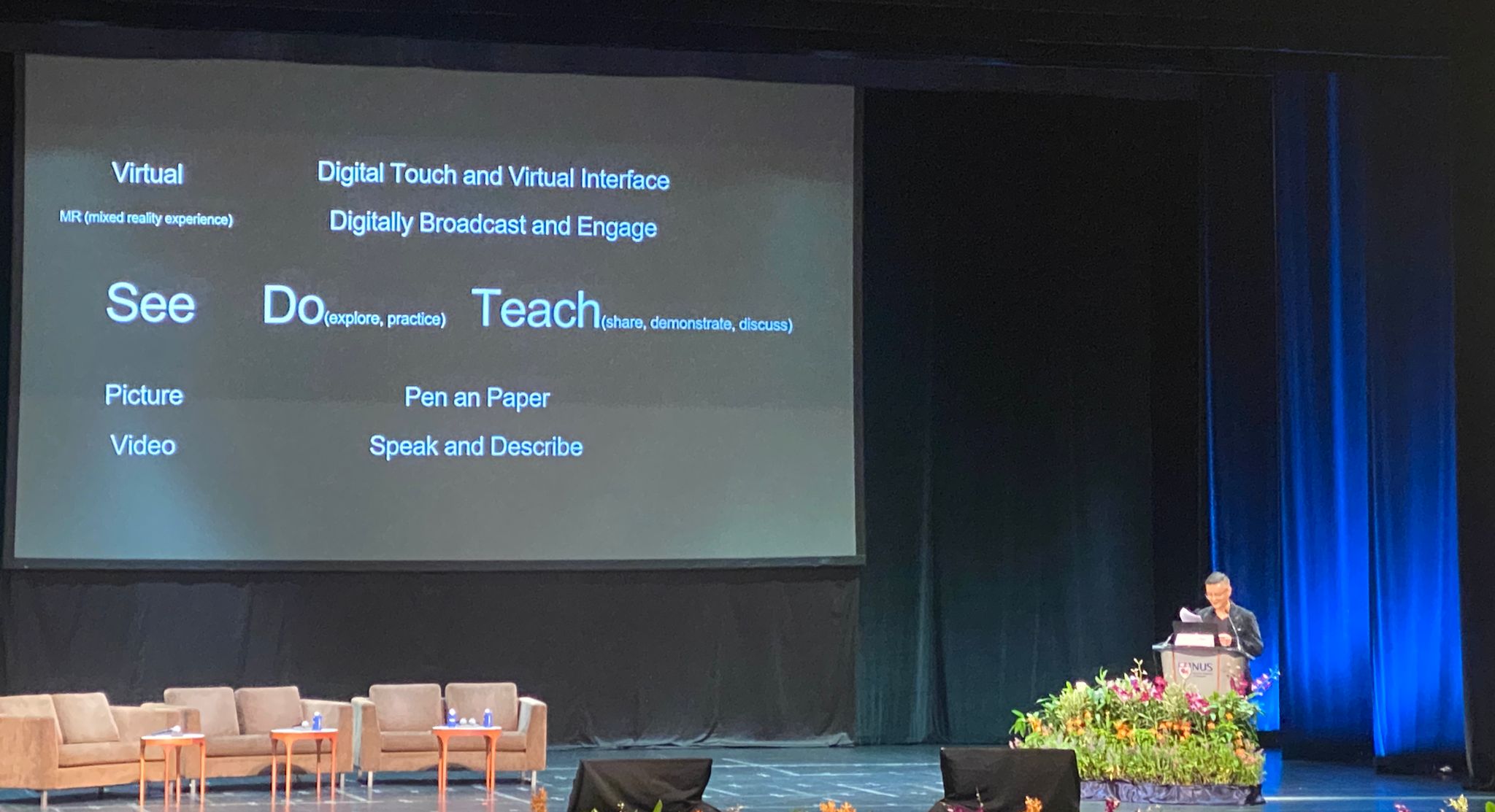
That Learning, and Scholarship are similar; both taken in small iterative, cumulative steps. We learn best and engage in scholarship working together within a Community of Interest and Community of Practice. Scholarship is open, public practice, an extension of learning. We "See (one), Do (one), Teach (one) … Write (‘do’ Scholarship .. then ‘be’ a Scholar .. then) Teach (again)". We "Take Note, Make Notes, then Share Notes". - Poh-Sun Goh, 26 November 2022, Saturday, 0423am, Singapore Time
Goh, P. S., Roberts-Lieb, S., & Sandars, J. (2023). Micro-Scholarship: An innovative approach for the first steps for Scholarship in Health Professions Education. Medical teacher, 45:3, 307-312. https://doi.org/10.1080/0142159X.2022.2133689
"(Open) Micro-Scholarship is an extension of (open) Micro-Practice and Micro-Learning; from Taking note, to Making notes, to Sharing notes." - Poh-Sun Goh, 22 October 2022, Saturday, 22 October 2022, 0731am, Singapore Time
Goh, PS, Schlegel, E. (2023). Small, Sustainable, Steps to Success as a Scholar in Health Professions Education - Micro (Macro and Meta) Matters. TAPS, 8(2), 76-79. https://doi.org/10.29060/TAPS.2023-8-2/SC2861
Roberts-Lieb, S, Goh, PS, Sandars, J. Using Technology for Translating Micro-Scholarship to Practice. (Medical Science Educator - resubmitted after revision, Saturday, 11 March 2023)
Carré, P. (2022). Apprenance: Rethinking How and Why Adults Learn. In: Evans, K., Markowitsch, J., Lee, W.O., Zukas, M. (eds) Third International Handbook of Lifelong Learning. Springer International Handbooks of Education. Springer, Cham. https://doi.org/10.1007/978-3-030-67930-9_14-1
Littlejohn, A. (2022). Challenges of Digital Professional Learning: Digital Technology Systems Are No Substitute for Human Agency. In: Evans, K., Lee, W.O., Markowitsch, J., Zukas, M. (eds) Third International Handbook of Lifelong Learning. Springer International Handbooks of Education. Springer, Cham. https://doi.org/10.1007/978-3-030-67930-9_56-1
Salling Olesen, H. (2022). Changing Concepts and Tools for Realizing Lifelong Learning Strategies. In: Evans, K., Lee, W.O., Markowitsch, J., Zukas, M. (eds) Third International Handbook of Lifelong Learning. Springer International Handbooks of Education. Springer, Cham. https://doi.org/10.1007/978-3-030-67930-9_19-2
Leggett, H., Sandars, J., & Roberts, T. (2019). Twelve tips on how to provide self-regulated learning (SRL) enhanced feedback on clinical performance. Medical teacher, 41(2), 147–151. https://doi.org/10.1080/0142159X.2017.1407868
Taylor, D. C., & Hamdy, H. (2013). Adult learning theories: implications for learning and teaching in medical education: AMEE Guide No. 83. Medical teacher, 35(11), e1561–e1572. https://doi.org/10.3109/0142159X.2013.828153
What are the 5 principles of deliberate practice?
Some take away messages...
"Talent is not enough. Practice is the difference between good and great. ...
Expert performance is hard work and requires repeated actions. ...
Petrosoniak, A., Lu, M., Gray, S., Hicks, C., Sherbino, J., McGowan, M., & Monteiro, S. (2019). Perfecting practice: a protocol for assessing simulation-based mastery learning and deliberate practice versus self-guided practice for bougie-assisted cricothyroidotomy performance. BMC medical education, 19(1), 100. https://doi.org/10.1186/s12909-019-1537-7
"Show, TEL and Do*
for Mastery Training (MT), Deliberate Practice (DP)
and Self-Directed Learning (SDL)
In Small (Micro*) - Steps* of Micro-Learning, Micro-Practice and Micro-Scholarship
In domains of Service, Education (Learning, Teaching and Training), and Scholarship
Illustration of ascending staircase with series of steps from left to right, with circular graphic at one of the steps with three arrowheads and three zones - the three arrowheads representing Show, TEL and Do, and the three zones - Service, Education and Scholarship." - Poh-Sun Goh, 16 December 2022, Friday, 0722am, Singapore Time
See (one), Do (one), Teach (one) … Write (‘do’ Scholarship .. then ‘be’ a Scholar .. then) Teach (again)
Poh-Sun Goh, 9 April 2022, 0446am, Singapore Time
In our journey toward deeper personal and professional growth and development, we inevitably start the process as novices, progressing from competency and proficiency toward becoming an expert with mastery as the aspirational goal and aim. Getting exposure, developing awareness and ‘trying out’ or ‘Seeing’, to ‘See’ (one) begins the process, followed by repetitive practice (with reflection and feedback), ‘Doing’ or to ‘Do’ (one). When we share and ‘Teach’ (one) what we are learning, and have learnt, we deepen our understanding and insight of the ‘technical’ aspects of what we have learnt. When we engage in Scholarship, and ‘Write’, by doing (Do), then being (Be) a Scholar we progress further along the path of expertise. Achieving Mastery, and being a Master takes place when we go deeper, and both experience, examine and then Teach (again) the fundamental principles, and ideas underpinning and forming the foundation of technical practice. Therefore See, Do, Teach, Write, then Teach (again). - https://www.instagram.com/p/CcGraM0vrW5/
Micro-Content (bite-size, modular content) FOR (Micro-) Learning, Practice, Assessment and Scholarship
and !
not only Assessment for Learning, and Assessment AS Learning ... (Micro-) Assessment AS Scholarship ... this is well established ... open digital and analogue practice in the Arts ... where open drafting, open sketching, and open practice and practices from the very outset, from early prototyping to early sketches IS part of the practice and professional craft(ing) process."
Poh-Sun Goh, 18 December 2022, Sunday, 0451am, Singapore Time
"leaders must create the conditions for people to realize their own capacity and power" - from section "Defining Remote Work Leadership" in Chapter "What Do I Really Need to Know About Leading Virtually", page 133, Remote Work Revolution: Succeeding from Anywhere by Tsedal Neeley (Harvard Business School), 2021, 1st edition, Harper Business, HarperCollinsPublishers, New York
Sequentially exploring and building on 'Why' before "What' and 'How'. This session will be supported by a purpose built open access blog (website). Participants will be requested to engage with the material and exercises on this blog before the e-Workshop (around 1 hour of reading and reflection on their personal and institutional needs and requirements in Health Professions Education). After which, in the live e-Workshop session, we will engage in 60 minutes of interactive discussion on themes, topics and practices that are relevant and practically implementable for the participants, in the widest possible (resource and practice) settings. At the end of the session, each participant will have, and be requested to share, a single short (Post-it like) note of their personal take-aways, including a single doable action step, to not only share with fellow participants, but to be posted on the session blog.
"One week ahead of the day of the session, I will be emailing participants the website link for a purpose built open access website - https://digitalliteracyinmeded.blogspot.com/ - containing material for pre-reading, reflection and 'homework', which I request participants spend one hour working through before the session. There will be a 'micro-assessment' exercise where participants will be requested to post a comment on the blog of their personal takeaways from reviewing the session material, and potential action steps moving forward. The deadline for participants to post their 'homework' on blog is latest by Saturday, May 20, 2023; one day before the session. We will be starting the session reviewing these participants posts. Doing this 'homework' and posting on the bulletin board before the session is a mandatory preparation and learning activity before the session, in order to be prepared, have started process to personalise the session content and practices for their own professional setting and needs, and be to be able to participate fully, and derive maximum potential value from the interactive discussions during the live session."
MBBS(Melb), FRCR, FAMS, MHPE(Maastricht), FAMEE. Associate Professor, Department of Diagnostic Radiology, Yong Loo Lin School of Medicine (YLLSOM), National University of Singapore (NUS). Senior Consultant, Department of Diagnostic Radiology, National University Hospital (NUH), National University Health System (NUHS). Associate Member, Centre for Medical Education, YLLSOM, NUS. Member, AMEE TEL (Technology Enhanced Learning) Committee (since 2011)
Poh-Sun is a Clinical Radiologist at NUHS/YLLSOM@NUS and has worked at NUH since 1989. He is also a Medical Educator, with Masters in Health Professions Education (MHPE) from Maastricht University (2012); with deep passion for both eLearning/Technology enhanced Learning and Faculty Development - locally and internationally. Dr Goh is formally trained as, and is an in-house Coach at YLLSOM. (visit https://orcid.org/0000-0002-1531-2053 for short description of professional activities and scholarship information)
Selected publications below:
Goh, PS, Schlegel, E. (2023). Small, Sustainable, Steps to Success as a Scholar in Health Professions Education - Micro (Macro and Meta) Matters. TAPS, 8(2), 76-79. https://doi.org/10.29060/TAPS.2023-8-2/SC2861
Goh, P. S., Roberts-Lieb, S., & Sandars, J. (2023). Micro-Scholarship: An innovative approach for the first steps for Scholarship in Health Professions Education. Medical teacher, 45:3, 307-312. https://doi.org/10.1080/0142159X.2022.2133689
"(Open) Micro-Scholarship is an extension of (open) Micro-Practice and Micro-Learning; from Taking note, to Making notes, to Sharing notes." - Poh-Sun Goh, 22 October 2022, Saturday, 22 October 2022, 0731am, Singapore Time
Goh, PS. 'The vision of transformation in medical education after the COVID-19 pandemic'. Korean J Med Educ. 2021;33 (3): 171-174. Publication Date (Web): 2021 August 27
Goh, P.S. Technology enhanced learning in Medical Education: What’s new, what’s useful, and some important considerations. MedEdPublish. 2016 Oct; 5(3), Paper No:16. Epub 2016 Oct 12.
Sandars, J., Goh, P.S. Is there a need for a specific educational scholarship for using e-learning in medical education? Med Teach. 2016 Oct;38(10):1070-1071. Epub 2016 April 19.
Goh, P.S., Sandars, J. An innovative approach to digitally flip the classroom by using an online "graffiti wall" with a blog. Med Teach. 2016 Aug;38(8):858. Epub 2016 Jul 14.
Stellefson, M., Hanik, B., Chaney, B., Chaney, D., Tennant, B., & Chavarria, E. A. (2011). eHealth literacy among college students: a systematic review with implications for eHealth education. Journal of medical Internet research, 13(4), e102. https://doi.org/10.2196/jmir.1703
Salcedo, D., Regan, J., Aebersold, M. et al. Frequently Used Conceptual Frameworks and Design Principles for Extended Reality in Health Professions Education. Med.Sci.Educ. 32, 1587–1595 (2022). https://doi.org/10.1007/s40670-022-01620-y
"6G networks are also said to have the potential to make the digital and physical world indistinguishable through holographic telepresence, as well as augmented reality and virtual reality (VR) technologies.
What’s more, 6G networks could deliver the promise of edge computing, where data processing is done by hardware mounted on, for example, a lamp post close to the user of a self-driving car or a pair of VR glasses, rather than in a data centre located far away. This also means the driverless car or the VR glasses need not be too bulky."
"As for Apple’s upcoming headset, there’s no guarantee the AR/VR gear will be a smash hit. According to The Verge, people who purchased one of Meta’s VR headsets in recent months are using it less often than those who bought them earlier in their life cycles.
That could mean that earlier adopters are simply more interested in the technology, while mainstream consumers aren’t particularly attached to it.
Apple will need its headset to be a truly impressive product if it’s going to drive massive consumer interest."
"The human mind is not like ChatGPT and its ilk, a lumbering statistical engine for pattern matching, gorging on hundreds of terabytes of data and extrapolating the most likely conversational response or most probable answer to a scientific question. On the contrary, the human mind is a surprisingly efficient and even elegant system that operates with small amounts of information; it seeks not to infer brute correlations among data points but to create explanations."
- above quoted from - Noam Chomsky: The false promise of chatGPT
"Access to knowledge and information has been democratized, but the ability to utilize it in a smart way has become the essence of expertise and intellectual competence."
"OpenAI announced that GPT-4 showed “human-level” performance on a range of standardised tests such as the US Bar exam and the SAT school tests, and showed off how its partners were using the AI software to create new products and services."
- above quoted from - "GPT-4 from OpenAI shows advances — and moneymaking potential, Financial Times" by Madhumita Murgia, Artificial Intelligence Editor, Financial Times, March 18, 2023
Leonard Kuan-Pei Wang, Praneet Sai Paidisetty & Alicia Magdalena Cano (2023) The next paradigm shift? ChatGPT, artificial intelligence, and medical education, Medical Teacher, DOI: 10.1080/0142159X.2023.2198663
Ken Masters (2023) Ethical use of artificial intelligence in health professions education: AMEE Guide No.158, Medical Teacher, DOI: 10.1080/0142159X.2023.2186203
Heather MacNeill, Ken Masters, Kataryna Nemethy & Raquel Correia (2023) Online learning in health professions education. Part 1: Teaching and learning in online environments: AMEE Guide No. 161, Medical Teacher, DOI: 10.1080/0142159X.2023.2197135
- Strategies for Developing Open Education Resources (OER) in Medical Education (pre-conference workshop), Thursday, 25 May 2023, 8am - 12noon (GMT +8.00) Singapore Time
Travel Award, Paper selected for oral presentation, 50th Japanese Society for Medical Education (JSME) Annual Scientific Meeting, Tokyo 2018
Hettige, S., Dasanayaka, E. & Ediriweera, D.S. Student usage of open educational resources and social media at a Sri Lanka Medical School. BMC Med Educ 22, 35 (2022). https://doi.org/10.1186/s12909-022-03106-2
Patel, D., & Parsley, S. (2015). Open educational resources. Community eye health, 28(90), 34.
Hilton, J. Open educational resources and college textbook choices: a review of research on efficacy and perceptions. Education Tech Research Dev 64, 573–590 (2016). https://doi.org/10.1007/s11423-016-9434-9
That Learning, and Scholarship are similar; both taken in small iterative, cumulative steps. We learn best and engage in scholarship working together within a Community of Interest and Community of Practice. Scholarship is open, public practice, an extension of learning. We "See (one), Do (one), Teach (one) … Write (‘do’ Scholarship .. then ‘be’ a Scholar .. then) Teach (again)". We "Take Note, Make Notes, then Share Notes". - Poh-Sun Goh, 26 November 2022, Saturday, 0423am, Singapore Time
Goh, P. S., Roberts-Lieb, S., & Sandars, J. (2023). Micro-Scholarship: An innovative approach for the first steps for Scholarship in Health Professions Education. Medical teacher, 45:3, 307-312. https://doi.org/10.1080/0142159X.2022.2133689
"(Open) Micro-Scholarship is an extension of (open) Micro-Practice and Micro-Learning; from Taking note, to Making notes, to Sharing notes." - Poh-Sun Goh, 22 October 2022, Saturday, 22 October 2022, 0731am, Singapore Time
Goh, PS, Schlegel, E. (2023). Small, Sustainable, Steps to Success as a Scholar in Health Professions Education - Micro (Macro and Meta) Matters. TAPS, 8(2), 76-79. https://doi.org/10.29060/TAPS.2023-8-2/SC2861
Goh, PS. 'The vision of transformation in medical education after the COVID-19 pandemic'. Korean J Med Educ. 2021;33 (3): 171-174. Publication Date (Web): 2021 August 27
Goh, P.S. Technology enhanced learning in Medical Education: What’s new, what’s useful, and some important considerations. MedEdPublish. 2016 Oct; 5(3), Paper No:16. Epub 2016 Oct 12.
Sandars, J., Goh, P.S. Is there a need for a specific educational scholarship for using e-learning in medical education? Med Teach. 2016 Oct;38(10):1070-1071. Epub 2016 April 19.
Goh, P.S., Sandars, J. An innovative approach to digitally flip the classroom by using an online "graffiti wall" with a blog. Med Teach. 2016 Aug;38(8):858. Epub 2016 Jul 14.
Innovations in Medical Education: Getting Beyond the Hype to What Really Works
Medical education, like any other field, benefits from advances driven by innovations over time. However, the innovation process is often misunderstood and mythicized by leaders and the general public. Education and innovation share a unique relationship in that successful innovation involves accelerated learning and development of novel insights. Consequently, the evolution of how we learn and teach impacts how we innovate.
In this symposium, we investigate the role of innovation in advancing the field of medical education to create new, sustainable value for healthcare, patients and society. We define what innovation is and address common misconceptions. Major innovations and their impacts to medical education will be reviewed. We will then explore the current state of education technology which has seen an acceleration in innovation over the past. There will be a focus on promising, emerging technologies. Next, we will describe major systematic approaches to innovation such as design thinking and lean methodology. Finally, we explore how education innovations can be sustained over time, even in low-resource settings.
Moderator: Tao Le
Understanding successful innovations
Ronald Harden
Successful innovations relating to admission to medical studies, the curriculum and assessment of the product will be considered. The penetration and success of the innovations can be attributed to a number of underlying, common factors. A key characteristic, as argued by Simon Sinek (2009) in the book Start with Why, was that they each had a clear purpose. This was to contribute to the delivery of an authentic and relevant programme. Also common to the innovations were four characteristics which had been described by Jack Schneider (2014) as crucial to the adoption of an innovation: perceived significance, philosophical compatibility, occupational realism and inference portability.
New directions in education technology
Poh Sun Goh
The COVID-19 pandemic shone a bright light on the importance of education technology. We will discuss three new “directions” or paths - exemplified by Virtual/Augmented and Mixed Reality (VR/AR/MR); Artificial Intelligence (AI) including the latest debates on generative AI and ChatGPT; and the current and future promise of mobile technology/networks anchored on 5G and future 6G wireless technology. The discussion will be strongly anchored on addressing the “job to be done” to quote Clayton Christensen. We will frame the use of educational technology in the context of “human needs” by augmenting, expanding and extending our human capabilities and reach, and ultimately bringing us closer together.
Design thinking and other methods of innovation
Tao Le
Contrary to popular belief, major inventions usually do not develop from spontaneous “Aha!” moments of sudden enlightenment. They are more likely to evolve from innovation systems characterized by structured processes implemented by determined teams over an extended period. Design thinking is a human-centered approach to creative problem solving. Focusing on the humans involved such as educators, students and patients is likely to lead better, more impactful products, services and internal processes. We will describe other innovation approaches such as systems thinking, agile methodology and lean startup and their applications.
Sustaining education innovation in low resource settings
Hoan Minh Nguyen
Innovation programs in education can be limited in time and quantity of funding, budgeting, and other support mechanisms. Integrating and sharing the effort with established systems, private-public partnerships, the local community, and other stakeholders is essential to maintain innovation outcomes. We will share work examples from the Partnership for Health Advancement in Vietnam’s (HAIVN) that illustrate how adapting educational innovations can contribute to successful curricular reform at the country’s medical schools in low-resource settings.
Technology enhanced learning in Medical Education: What’s new, what’s useful, and some important considerations
Presenter: Poh-Sun Goh
Three "new", topical and trending areas to reflect upon are Virtual Reality (VR)/Augmented Reality (AR)/Mixed Reality (MR); Machine learning or Artificial Intelligence (AI)/big data/data analytics; and Robotics. Four interrelated "useful" features of Technology enhanced learning (TeL) relate to the utility of digital content, the connectivity provided by the internet, the use of mobile devices, and the functionality provided by software and digital applications or Apps. Some "important" considerations using TeL relate to usability, cost, the conscious use of instructional design and pedagogical best practices and evidence, and maintaining a scholarly mindset.
Goh, P.S. Technology enhanced learning in Medical Education: What’s new, what’s useful, and some important considerations. MedEdPublish. 2016 Oct; 5(3), Paper No:16. Epub 2016 Oct 12.
Presenter: Poh-Sun Goh – National University of Singapore
Plenary Address: Tuesday, June 16, 2020, 11:30 AM – 12:30 PM
This session will explore how near future technology can impact how we educate healthcare professionals and the way they provide care.
In this address, the idea is to examine how “new” methods and platforms for displaying information, engaging an audience, extending and expanding the cognitive presence of “the instructor”, and increasingly “guide” will transform the learning experience, and training outcomes, of our educational efforts; and also explore how these same technologies, which will include Artificial Intelligence (AI) and Machine Learning, Virtual Reality (VR) and Augmented Reality (AR), online and re-imagined out-of-the-simulation-center skill training experiences (inspired and modeled after gaming platforms), can augment, enhance, and transform how we educate and train healthcare professionals, along the whole continuum of learning, from undergraduate learning, through postgraduate training, to lifelong learning and continuing professional development settings.
"6G networks are also said to have the potential to make the digital and physical world indistinguishable through holographic telepresence, as well as augmented reality and virtual reality (VR) technologies.
What’s more, 6G networks could deliver the promise of edge computing, where data processing is done by hardware mounted on, for example, a lamp post close to the user of a self-driving car or a pair of VR glasses, rather than in a data centre located far away. This also means the driverless car or the VR glasses need not be too bulky."
"As for Apple’s upcoming headset, there’s no guarantee the AR/VR gear will be a smash hit. According to The Verge, people who purchased one of Meta’s VR headsets in recent months are using it less often than those who bought them earlier in their life cycles.
That could mean that earlier adopters are simply more interested in the technology, while mainstream consumers aren’t particularly attached to it.
Apple will need its headset to be a truly impressive product if it’s going to drive massive consumer interest."
"The human mind is not like ChatGPT and its ilk, a lumbering statistical engine for pattern matching, gorging on hundreds of terabytes of data and extrapolating the most likely conversational response or most probable answer to a scientific question. On the contrary, the human mind is a surprisingly efficient and even elegant system that operates with small amounts of information; it seeks not to infer brute correlations among data points but to create explanations."
- above quoted from - Noam Chomsky: The false promise of chatGPT
Leonard Kuan-Pei Wang, Praneet Sai Paidisetty & Alicia Magdalena Cano (2023) The next paradigm shift? ChatGPT, artificial intelligence, and medical education, Medical Teacher, DOI: 10.1080/0142159X.2023.2198663
Ken Masters (2023) Ethical use of artificial intelligence in health professions education: AMEE Guide No.158, Medical Teacher, DOI: 10.1080/0142159X.2023.2186203
Heather MacNeill, Ken Masters, Kataryna Nemethy & Raquel Correia (2023) Online learning in health professions education. Part 1: Teaching and learning in online environments: AMEE Guide No. 161, Medical Teacher, DOI: 10.1080/0142159X.2023.2197135
- Coaching as a high impact intervention in Health Professions Education (symposium), Saturday, 27 May 2023
Coaching
Shorey, S., Ang, E., Chua, J., & Goh, P. S. (2022). Coaching interventions among healthcare students in tertiary education to improve mental well-being: A mixed studies review. Nurse education today, 109, 105222. https://doi.org/10.1016/j.nedt.2021.105222
COACHING AS A HIGH IMPACT INTERVENTION IN HEALTH PROFESSIONS EDUCATION
Overview, Background Theory and Literature Review
Poh-Sun Goh
Will focus on two areas. 1) Compare and contrast, with examples and literature, what coaching, compared with mentoring, guidance and direct instruction is good for, specificially 'What the job to be done’ is, essentially what you ‘hire’ a coach for. 2) Then describe in outline form ‘what’ coaching is, compared with mentoring, guiding, and direct instruction.
Lai, Yi-Ling & Passmore, Jonathan. (2019). Coaching psychology: Exploring definitions and research contribution to practice?. International Coaching Psychology Review. 14. 69-83. 10.53841/bpsicpr.2019.14.2.69.
Coaching Conversations with Medical Students - How, What and Why
Elizabeth Teh
Will talk about the structure of ontological coaching conversations; based on the 8Ps model, leading up to the group presenting the “What is coaching?” card at the end of the session.
Focusing on two main points: 1) Questions that a coach might ask to facilitate the client’s self-discovery (as opposed to questions we might ask as a teacher or mentor), and 2) Skills and competencies required of a coach to create a safe, engaging space for an effective coaching conversation.
—
Elevating the Medical School Experience Through Coaching: Common Themes and Approaches to Overcoming Challenges Students Face
Nisha Kesavan
Willl first address some common themes and challenges medical students face.
Then speak about how a coach approaches challenges that a coachee raises, as well as how we can jointly develop strategies they can implement in their lives to overcome these hurdles.
—
Key Considerations in Developing and Implementing a Coaching Program in Medical Education
Kesavan Esuvaranathan
This will be a candid, before and after narrative of the key considerations in introducing a novel coaching program into a heavily structured and dense medical curriculum.
The presentation will outline the careful planning necessary to avoid major pitfalls and also discuss the flexibility and creativity require to respond strategically to traditional medical culture and legacy systems in medical education.
“Simply put. Coaching to - 'Feel’ Good, ‘Look’ Good, and ‘Be’ Good
where ‘Good’ - is defined by Coachee, with assisted awareness, through reflection, working in partnership with the Coach
where Feel - includes Somatic, Thinking, and Emotions
where ‘Look and Be’ - includes what the ‘mirror’ and ‘world’ sees, from ‘Appearance’ and Performance’, including observations and feedback from the Coach.”
Poh-Sun Goh, Monday, 17 April 2023, 0711am, Singapore time
Shorey, S., Ang, E., Chua, J., & Goh, P. S. (2022). Coaching interventions among healthcare students in tertiary education to improve mental well-being: A mixed studies review. Nurse education today, 109, 105222. https://doi.org/10.1016/j.nedt.2021.105222
Wolff, M., Hammoud, M., Santen, S., Deiorio, N., & Fix, M. (2020). Coaching in undergraduate medical education: a national survey. Medical education online, 25(1), 1699765. https://doi.org/10.1080/10872981.2019.1699765
"Advising, Mentoring and being Sponsored can get you in the door, help open the door. Coaching and being Coached helps you decide which room to go in, and keeps you in the room, by understanding your why, your motivations. What you need. Why you think and feel you need these. Ultimately what underpins and forms the foundation of your Academic, Clinical and Professional Performance and Presence. Coaching keeps you in the room." Poh-Sun Goh, Monday, 17 April 2023, 0736am, Singapore Time
above comment in response to Table 5, in article below
Margaret Wolff, Maya Hammoud, Sally Santen, Nicole Deiorio & Megan Fix (2020) Coaching in undergraduate medical education: a national survey, Medical Education Online, 25:1, DOI: 10.1080/10872981.2019.1699765 https://www.tandfonline.com/doi/full/10.1080/10872981.2019.1699765
Maini, A., Fyfe, M. & Kumar, S. Medical students as health coaches: adding value for patients and students. BMC Med Educ 20, 182 (2020). https://doi.org/10.1186/s12909-020-02096-3
Graddy, Ryan MD; Wright, Scott MD. On the Value of Coaching in Medicine. Academic Medicine 91(8):p 1037, August 2016. | DOI: 10.1097/ACM.0000000000001270
Carney, P.A., Bonura, E.M., Kraakevik, J.A. et al. Measuring Coaching in Undergraduate Medical Education: the Development and Psychometric Validation of New Instruments. J GEN INTERN MED 34, 677–683 (2019). https://doi.org/10.1007/s11606-019-04888-w
N. DeTurk, S., J. Kaza, A., & Ng Pellegrino, A. (2022). Coaching and Mentoring: Focus on Graduate Medical Education. IntechOpen. doi: 10.5772/intechopen.94182
"ICF defines coaching as partnering with clients in a thought-provoking and creative process that inspires them to maximize their personal and professional potential. Coaching is a client-driven process.
The coach’s responsibility is to:
• Discover, clarify and align with what the client wants to achieve
• Encourage client self-discovery
• Elicit client-generated solutions and strategies
• Hold the client responsible and accountable
The coaching process helps clients improve their outlook on work and life, while improving their
"What zone am I in right now? ... What am I giving my attention to? ...What actions can I take right now?
The only way to get a new result is to take a new action ... (the questions above) can unlock new pathways when the territory gets unclear. Managing yourself starts with managing your nervous system, what you give your energy to, and what actions you can take. This is where you can begin to make a difference for your present and future."
"In accepting his (Tony) award (after a 50 year career), (Andre) De Shields shared his three cardinal rules for longevity: One, surround yourself with people whose eyes light up when they see you coming. Two, slowly is the fastest way to get where you want to be. And three, the top of one mountain is the bottom of the next, so keep climbing, he said." quote from - https://www.latimes.com/entertainment/arts/la-et-cm-andre-de-shields-20190609-story.html
Pre-Conference Course: The 5S of Small, Sustainable, Steps to Successful Scholarship for Health Professions Educators
Date & Time
Saturday, 10 June 2023, 12:15 - 15:15
Speakers
Alice Fornari - Donald and Barbara Zucker SOM at Hofstra/Northwell
Mildred López - Tecnologico de Monterrey
Sol Roberts-Lieb - Carle illinois College of Medicine
Elisabeth Schlegel - Western Atlantic University School of Medicine
Poh-Sun Goh - National University of Singapore
Description
Getting started and continuing in scholarship can be a challenge for all faculty as faculty need to know the how and have continuous faculty development in a distributed world. This workshop will provide participants with the theoretical background of Micro-Scholarship ( Goh, Roberts-Lieb, Sandars 2022), the process and potential use of a wide variety of technologies for Micro-Scholarship, and an opportunity to actively plan how they can develop and present their own scholarship of being a medical educator. In addition, participants will develop their approach to metareflection and identify supportive communities of practice and mentors.
That Learning, and Scholarship are similar; both taken in small iterative, cumulative steps. We learn best and engage in scholarship working together within a Community of Interest and Community of Practice. Scholarship is open, public practice, an extension of learning. We "See (one), Do (one), Teach (one) … Write (‘do’ Scholarship .. then ‘be’ a Scholar .. then) Teach (again)". We "Take Note, Make Notes, then Share Notes". - Poh-Sun Goh, 26 November 2022, Saturday, 0423am, Singapore Time
Goh, P. S., Roberts-Lieb, S., & Sandars, J. (2023). Micro-Scholarship: An innovative approach for the first steps for Scholarship in Health Professions Education. Medical teacher, 45:3, 307-312. https://doi.org/10.1080/0142159X.2022.2133689
"(Open) Micro-Scholarship is an extension of (open) Micro-Practice and Micro-Learning; from Taking note, to Making notes, to Sharing notes." - Poh-Sun Goh, 22 October 2022, Saturday, 22 October 2022, 0731am, Singapore Time
Goh, PS, Schlegel, E. (2023). Small, Sustainable, Steps to Success as a Scholar in Health Professions Education - Micro (Macro and Meta) Matters. TAPS, 8(2), 76-79. https://doi.org/10.29060/TAPS.2023-8-2/SC2861
Goh, PS, Schlegel, E. Small, Sustainable, Steps to Success as a Scholar in Health Professions Education - Micro (Macro and Meta) Matters. (The Asia Pacific Scholar, submitted revision on 3 October 2022, accepted for publication 1 November 2022; to be published in April 2023 issue.)
Roberts-Lieb, S, Goh, PS, Sandars, J. Using Technology for Translating Micro-Scholarship to Practice. (Medical Science Educator - resubmitted after revision, Saturday, 11 March 2023)
Heather MacNeill, Ken Masters, Kataryna Nemethy & Raquel Correia (2023) Online learning in health professions education. Part 1: Teaching and learning in online environments: AMEE Guide No. 161, Medical Teacher, DOI: 10.1080/0142159X.2023.2197135
Heather MacNeill, Ken Masters, Kataryna Nemethy & Raquel Correia (2023) Online learning in health professions education. Part 1: Teaching and learning in online environments: AMEE Guide No. 161, Medical Teacher, DOI: 10.1080/0142159X.2023.2197135
“The main theme of AMEE 2023 is ‘Inclusive Learning Environments to Transform the Future’ but other key areas in health professions education will also be included.’
Travel Award, Paper selected for oral presentation, 50th Japanese Society for Medical Education (JSME) Annual Scientific Meeting, Tokyo 2018
Future roles of Educators in Radiology Profession, Approaches to Scholarship Radiology Education, Leveraging on Technology for Radiology Education
Exploring Emerging Opportunities - Future Roles, Technology and Scholarship in Radiology Education
By Goh Poh Sun
How can we do more? Expand activities? Have greater impact?
What are our current, and potential future roles? In Clinical Care, Education and Training, Research and Scholarship? How can we assist and add value to interactions with clinicians? Patients? How do we build on our integrated role in Clinical Care, Education and Training? Our interactions and trust with Clinicians? Our location within Medical Schools and Curriculums? Within Academic Medical Centres and Hospitals? Add value to the scans we produce? The opinions we give? (the Radiology Report), The procedures we perform?
How can we approach Scholarship? Engage in Scholarship? For all?
How can we take full advantage of Technology to do more? Expand our activities? Have greater impact? Scale? Deepen? Extend?
Going to the next level of Micro-learning from Micro-Teaching: Micro-Assessment in Health Professions Education
Presenter(s): Poh-Sun Goh, Elisabeth Schlegel, Alice Fornari
Session Details: 6O: Conference Workshop - Going to the next level of Micro-learning from Micro-Teaching: Micro-Assessment in Health Professions Education, 27th August 2024, 09:00 - 10:30, Room: Kairo 1


%20matters.jpg)

.jpg)


Learning%20or%20T(e)L%20in%20Med%20Ed.jpg)


%20in%20Medical%20Education.jpg)

%20-%20Content,%20Practice(s)%20and%20Scholarship%20.001.jpeg)
%20-%20Content,%20Practice(s)%20and%20Scholarship%20.002.jpeg)


%20Performance.001.jpeg)
%20Performance.001.jpeg)
%20Performance.002.jpeg)
%20Performance.003.jpeg)
%20Performance.004.jpeg)
%20Performance.005.jpeg)
%20Performance.006.jpeg)
%20Performance.007.jpeg)
%20Performance.008.jpeg)
%20Performance.009.jpeg)
%20Performance.010.jpeg)
%20Performance.011.jpeg)